Face the facts, logistics between China and Australia demand expertise. Who unravels all those sticky customs details and transports containers from Chinese factories to Australian stores, with deadlines closing in and clients growing impatient? That answer, right now, revolves around the freight forwarder between China and Australia, a presence anyone with cargo hopes for but doesn’t always realize they need. The tactics, the alliances, and the heartbeat of each shipment—they count. So, what actually shifts when a seasoned logistics partner takes control of every step and insists on seamless international trade?
The role of a freight forwarder between China and Australia in global shipping
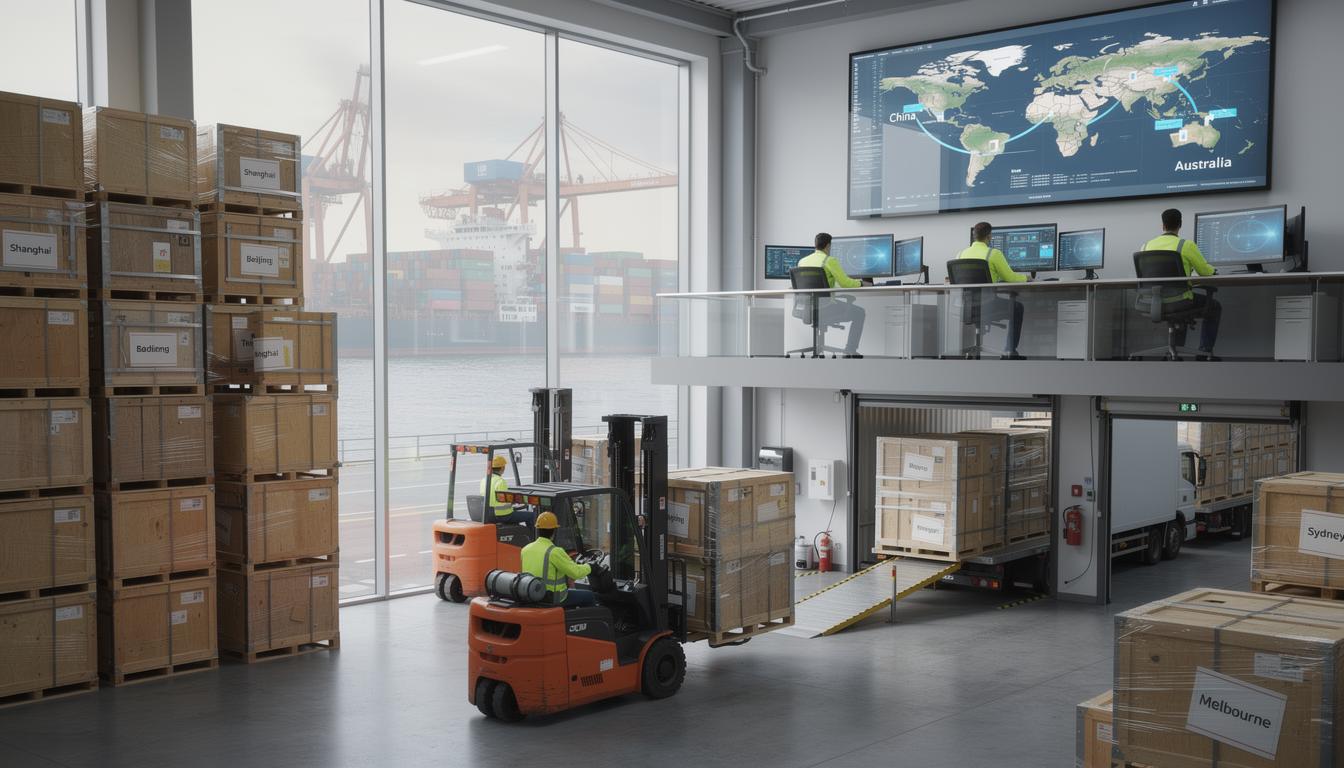
Every piece of the supply chain fits together, at least when a professional orchestrates the process. A freight forwarder connecting China and Australia doesn’t see a single workflow—it juggles streams of paperwork, tracks vessels already delayed by Pacific weather, negotiates capacity, and deals with regulations that love to change overnight. Today, Shanghai’s colossal terminals and Sydney’s glinting quays both pulse, their rhythm set by logistics planners working in two worlds.
Have you seen this : How does a legionella log book help maintain water safety compliance?
The moments of genuine pressure arrive with customs whispers, peak loads, or new tariffs that shake up shipping lines without apology. That’s why a freight forwarder’s day veers from securing space on a jammed boat to sending alerts about cargo status—no minute off-duty. Irony—bureaucracy feels oddly like a passport, not a prison, when a skilled agent handles it for you. Delays begin to melt away, updates come in faster, and even a late vessel invites a backup plan, not panic. Real performance? It emerges with each tight transfer and on-the-fly reroute. For comprehensive support across the entire route, explore China to Australia Freight Services.
The specific functions handled by freight forwarders China–Australia
Office lights stay on late somewhere, sorting cargo invoices that hinge on a missing digit or an odd code. Who dives into dangerous goods? Compliance teams spring to action, stacking safety sheets and matching them to each pallet. They send emails, scan customs forms, haggle with carriers for price edges no one else touches. That’s lunch, not a crisis. Peak season scorches the system—suppliers watch as slots vanish, yet some forwarders secure space, thanks to alliances built handshake by handshake.
Have you seen this : Why Choose a Tree Surgeon in Moray: the expert solution for safe trees?
Insurance coverage stands by, digital tags quietly beep location updates, risk management expands beyond a checklist
Operations don’t just run, they anticipate, unfurling alternatives before bottlenecks grow teeth. Smooth sailing? Often, it’s only two calls ahead of panic.
The differences between China–Australia and other global freight corridors
Forget standard routes, the Pacific between China and Australia works by its own rules, swayed by biosecurity checks, bustling ports, and regional quirks. The lead times surprise—faster than Europe, slower than California, neither extremity captures the rhythm. Documentation becomes a battleground of scans and signatures, constantly tested by new digital systems but always caught around a particular port. Price and compliance shift, depending on whether authorities decide to check that wooden pallet or a new animal product.
| China–Australia | China–Europe | China–US | |
|---|---|---|---|
| Average Transit Time (Sea) | 15–21 days | 30–38 days | 14–18 days |
| Key Export Ports | Shanghai, Shenzhen | Shanghai, Ningbo | Shanghai, Yantian |
| Key Import Ports | Sydney, Melbourne | Rotterdam, Hamburg | Los Angeles, Long Beach |
| Customs/Compliance | Stringent Australian biosecurity, strict documentation | Complex EU VAT/CE rules | AMS filing, FDA for food/goods |
| Average Cost per Container (2026) | $2,600–$3,400 | $3,000–$4,200 | $2,700–$3,800 |
Sydney runs much faster than smaller ports, no doubt, but a typo shoves goods into limbo. Melbourne leans into agricultural strength, rarely slowing unless rain floods tracks. Freight forwarders, only the mindful ones, carve real value not through cost cuts alone but by sidestepping snags port by port. Capacity hits its limits during the Australian harvest, delays tumble across the region, sometimes weather trumps negotiation. The nuances matter—a day lost to paperwork triggers a cascade across multiple delivery points.
The logistics network that keeps China–Australia trade moving
From sea to air, not all carriers fit all cargo. Choice rules.
The principal shipping methods for China–Australia trade
Bulk cargo dominates, floating over the Pacific from Shanghai or Shenzhen to Sydney, slow and steady, tucked inside containers for eighteen to twenty-one days. Electronics, industrial gear, furniture—catch them drifting through customs in ocean shipments, while air freight speeds high-value items and perishables, unbothered by the price tag. Air shipments blitz the route in two to five days, dispatched straight into urban centers and remote towns alike. Express carriers, led by DHL or SF Express, blitz packages into Australia, skipping hold-ups with tailored solutions. Hybrid modes emerge, blending truck, rail, and sea into a seamless reroute when weather or border hiccups strike. Again, choice isn’t an illusion. Which one fits the next order—cost or speed?
- Ocean freight holds steady, enveloping 80 percent of traffic.
- Air freight rules the urgent, at premium pricing.
- Digital tracking slips into routines, reducing blind spots.
The main ports shaping China–Australia shipping
The route feels defined by a handful of giants—Shanghai, Shenzhen, Sydney, Melbourne, and Brisbane—each stamping its mark on throughput, speed, or specialty. Shanghai brims with general container traffic, propelled by a workforce familiar with electronics and mega-vessel flows. Shenzhen whirs, serving factories and tech parks morning and night.
On the Australian coast, Sydney processes diverse cargo, making connections smoother thanks to upgraded customs and tracking. Brisbane elevates perishables with cold chain controls; Melbourne thrives on agriculture, its rail lines beating straight to inland receivers. Forget one import ID? Sydney can push back clearance indefinitely. Shenzhen, with its digital cargo tags, trims headaches others can’t anticipate.
| Port | 2026 Throughput (TEU) | Specialization |
|---|---|---|
| Shanghai | 48 million | General container, electronics |
| Shenzhen | 29 million | Manufacturing, tech components |
| Sydney | 2.9 million | Mixed, consumer goods |
| Melbourne | 3.1 million | Agricultural exports, machinery |
| Brisbane | 1.5 million | Bulk, minerals, foodstuffs |
Every port tweaks efficiency, distribution, and clearance—getting that detail wrong unravels careful plans. Infrastructure matters almost more than capacity—modern terminals shave days off even the longest queues. The seasoned forwarder working between China and Australia maps these differences, dodges avoidable delays, and quietly pushes shipments to the front.
The steps freight forwarders between China and Australia follow for stress-free shipping
A smooth move rarely gets noticed—the drama only erupts in paperwork purgatory; the lessons sting longer than any memo.
The planning and documentation every China–Australia shipment demands
Compliance comes first, always. Commercial invoices read like novels—numbers, item descriptions, country-of-origin markers, every field must line up. Miss a line, customs freeze the cargo, cost and timeline spiral. Packing lists undergo scrutiny, bills of lading circulate among shippers and consignees, detail by detail. Permits hinge on HS codes, covering every odd commodity or high-risk material—what derails once passes for routine elsewhere. Coordination threads its way through digital forms and last-minute regulatory shifts, all tracked in fast-evolving platforms. Teams in both countries snap into place, routing exceptions and fine-tuning clearances to avoid expensive surprises. Errors ripple, one input missed, the chain gets stuck—this is why process discipline wins shipments.
The risk controls and security strategies for international shipments
No cargo shipment breathes easy without a network of safeguards. Insurance always remains part of the plan when a container slides during rough seas or biosecurity triggers secondary checks. Strong forwarders pair risk assessments with active monitoring, leveraging technology to light up every movement and flag issues before they snarl progress.
Digital tracking assumes the role of silent partner, delivering transparency one ping at a time while insurance cushions financial shocks
Coordination with proven handlers, pre-emptive checks, secure loading—all fundamentals for security. Experience teaches that surprises lurk, but calm and competency avert the worst blows. Transparency, the willingness to inform, not just reassure, shapes resilience in supply chains.
Rachel Mao, import manager in Melbourne, remembers her first year managing volume in 2026. “My forwarder never sounded rushed. I called about containers stuck again—we’d already stacked a week of invoices. He said, ‘Already sorted, Rachel, fresh routing, customs cleared, demurrage reversed.’ That moment, stress vaporized. I saw the value, not in promises, but actual solutions, delivered before I even asked.”
The challenges and creative solutions in China–Australia freight flows
The obstacles do not ebb away; they shift or pile up when least expected. Regulatory changes touch down overnight—biosecurity, tariff updates, language slip-ups, and capacity squeezes slow containers to a crawl. Australia’s vigilant customs do not hesitate, one overlooked term and costs rocket, containers idle, reputations and cash balances stagger. Manufacturing peaks in China? Port congestion flares, requests for updates flood in, and every hour forms a tiny pressure cooker. Challenges multiply for those outside the loop—how many have watched a shipment go awry by a single document misfiled?
The solutions a freight forwarder between China and Australia deploys
Adaptability, not hope, solves supply chain hiccups. The leading forwarders slip digital platforms into the process, shrinking the gap between promised and delivered. Real-time tracking answers the anxiety; customs consultancy inches close to a science, not a gamble. Route flexibility, enabled by broad partnerships, keeps goods moving despite obstacles, as reroutes spring up during weather or labor disruptions. Plans B and C are never footnotes—forwarders spin up new carriers, alternate clearances, every time system shocks hit. The final buffer rests in that extra margin of anticipation—hiccups never escalate, brands recover before anyone even notices the trouble.
The elements that define the choice of a China–Australia freight forwarder
Accreditation stands out; forwarders prove their worth when registered with Australian and Chinese authorities. Reputation rarely fools, especially when reviews cluster around fast responses and flexible service. Technology—tracking tools, online documentation, digital quoting—trims wasted hours and exposes weak spots. Trust forms around price visibility, never around shadowy fees or buried service conditions. Worth noting, support endures—after-hours calls, urgent updates, all those moments outside the comfort zone. Only then do goods arrive, no matter the storm or shutdown.
The cost frameworks for bulk, small, and urgent shipments?
Rates rarely align, even for similar shipments. Small consignments, consolidated into shared containers, generate costs by cubic meters; full loads settle into stable values if demand stays steady. Air feels steep—charged by ton, yet the delivery speed sometimes means the difference between success or a penalty. Break out those invoices for transparency, every detail spells a stronger negotiation stance. Fuel, port charges, insurance, customs handling? Ordinary, yet every charge needs a full breakdown. Armed with this knowledge, negotiation finds its teeth—remaining surprises only good ones.
| Service Type | Small Cargo (LCL) | Full Container (FCL) | Air Freight |
|---|---|---|---|
| Estimated Cost (2026 USD) | $95–$180 per m3 | $2,700–$3,200 | $4,900–$7,200 per ton |
| Tariff Impact | Medium | Lower | Higher |
| Speed | 18–25 days | 14–21 days | 2–4 days |
Final results depend on the combination of service quality, transparency, technological muscle, and above all, a service culture that signals, sometimes quietly, that there are no shortcuts—just experience, attention, and the instinct to intervene before small setbacks harden into real disruptions.